Silk Road Secret Agents: Armenian Cassette Culture
02.25.25
Silk Road Secret Agents is Discotchari’s monthly debriefing of music that highlights the fusion of musical movements around the world and throughout the ages with ethnic identities rooted in the diverse Silk Road region. We also dive deep into the history of artists whose life stories and music evoke dramatic cinema fit for Tarantino, Kiarostami, Wong Kar-Wai, Youssef Chahine and other legendary directors. These artists often times relied on their musical talent to navigate complex social structures, unite people from different backgrounds, and preserve their ethnic roots by reimagining them in new forms: inspiring the name “Silk Road Secret Agents”.
The basis of the Silk Road’s influence was local demand and appreciation for foreign supply of spices, materials, knowledge and all other tangible forms of culture. Alongside our radio show, we bring these values into the real world by playing and promoting live events featuring local talent who collectively embody the second metaphor of “Silk Road Secret Agents”: music selectors and artists acting as ambassadors and creators of international dance and roots music that is embedded with traditions catering to multinational audiences commonly found in cities with rich social fabric.
~~~~~~~~~~~~~~~~~~~~~~~~~~~~~~
Today we’re diving headfirst into the beautifully chaotic world of ’90s and early 2000s Yerevan, specifically the music scene. Trance and hip-hop was making its way to the airwaves, and while the country’s economy and national security was hanging on by a thread, its creative scene was thriving. While America flourished in a post Cold-War environment, 1990s in Armenia were known as the cold and dark years, in constant shortage of energy and basic consumer goods, having access to electricity only 3 hours a day and getting black market canned goods was a reality for majority of the population in Armenia.
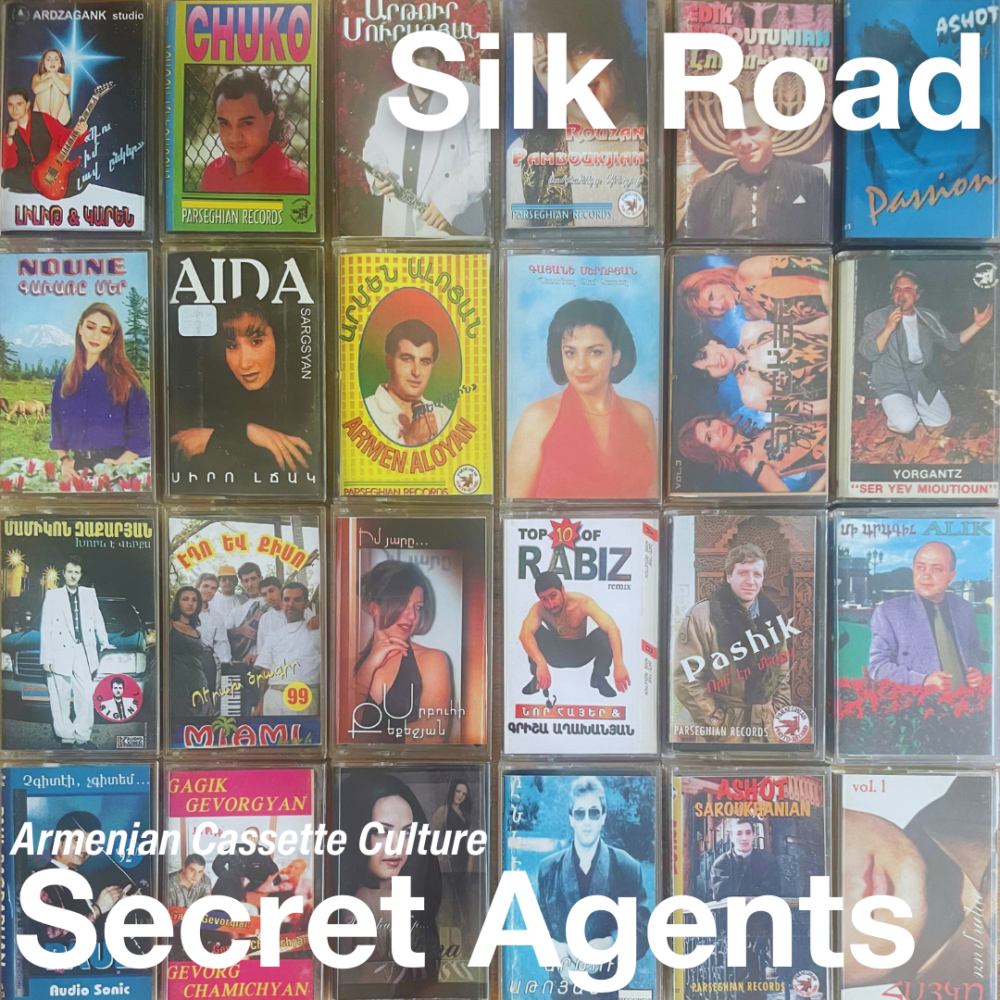
Back then cassettes were the unofficial currency, cheap, easy to record over, and the ultimate DIY tool. Most people kept a blank tape permanently in their player, ready to hit “record” the second their favorite song came on the radio. This wasn’t just casual music collecting, it was a full-blown bootleg culture. Tapes would get recorded over, passed around, and shared between family and friends, creating a living, breathing archive of the era, one homemade mixtape at a time. On a recent trip to Yerevan, we uncovered a whole stash of these bootleg gems, some featuring fresh releases from local artists, others taped over Russian pop albums. So, pour yourself a coffee as black as existential dread of the 90s, buckle up, and take a drive through the city, because if you really want to feel like a taxi driver in ’90s Yerevan, you’ll need two things: a pair of rosaries dangling from your rearview mirror and one of those wooden beaded massage seat covers.