guest session
12.21.25
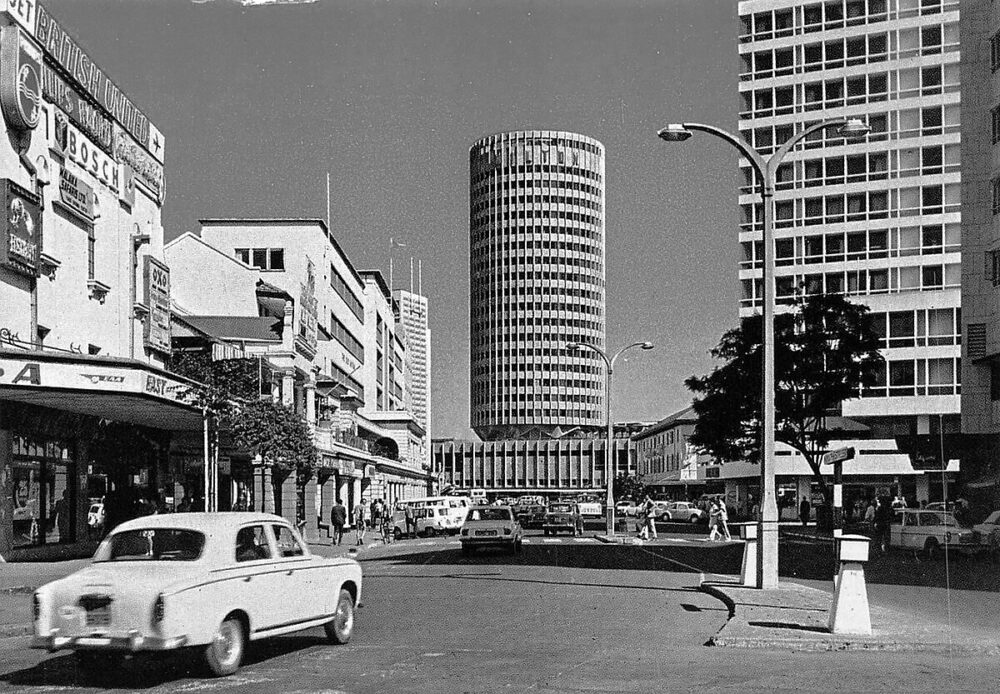
Kamaru was born in 1939, in Kangema, Muranga District. In 1957 he moved to Nairobi where he got a cleaning job. His first formal job was working as a house-help and a nanny, earning enough money to purchase his first guitar. He started pursuing music in 1965. Kamaru made his first commercial breakthrough in 1967, although the height of his musical career was between 1975 and 1985, with the release of many adults-only cassettes, all dealing with Kikuyu folk songs. In the late 1980s he was the first Kenyan artist to play at the Carnivore Restaurant, at that time only hosting foreign artists.
Many of Kamaru’s songs were political, either praising or criticising the government. Initially he had a good relationship with President Jomo Kenyatta, but after Kamaru wrote a song in 1975 condemning the murder of Josiah Mwangi Kariuki he fell out with him. After Kenyatta’s death, the succeeding president, Daniel arap Moi, was close to the artist. In 1980, Kamaru toured Japan as a part of President Moi’s entourage, but later Moi grew displeased with Kamaru’s support for multiparty democracy.
Kamaru received significant support from Voice of Kenya radio presenter Job Isaac Mwamto, who embraced the rise of Kenyan music, by presenting Kamaru’s music to his radio stations. He was often called “Kenya’s Jim Reeves”. He recorded nearly two thousand songs addressing morality and offering life teachings. The songs launched his status as a Kikuyu music legend and had a big impact on the East African music scene.
In the 1990s, Kamaru announced that he had been “born again” and would no longer perform the secular music on which he had built his career, though he did make some secular performances later on. In 1993, he turned to gospel music and disbanded his previous group, the Kamaru Super Sounds, a change which damaged his record sales. Kamaru was once the chairman of the Kenya Association of Phonographic Industries (KAPI), and owned a church ministry in Nairobi. He also ran two record stores in Nairobi. Kamaru expressed interest in building a Kikuyu cultural home on one of his farms in Murang’a to safeguard and protect the Kikuyu culture, though this was not accomplished by the time of his passing in October 2018. He was survived by two siblings, one daughter and three sons. His grandson, also named Joseph Kamaru, is a musician and sound artist who goes by the artistic name KMRU, currently based in Berlin.